
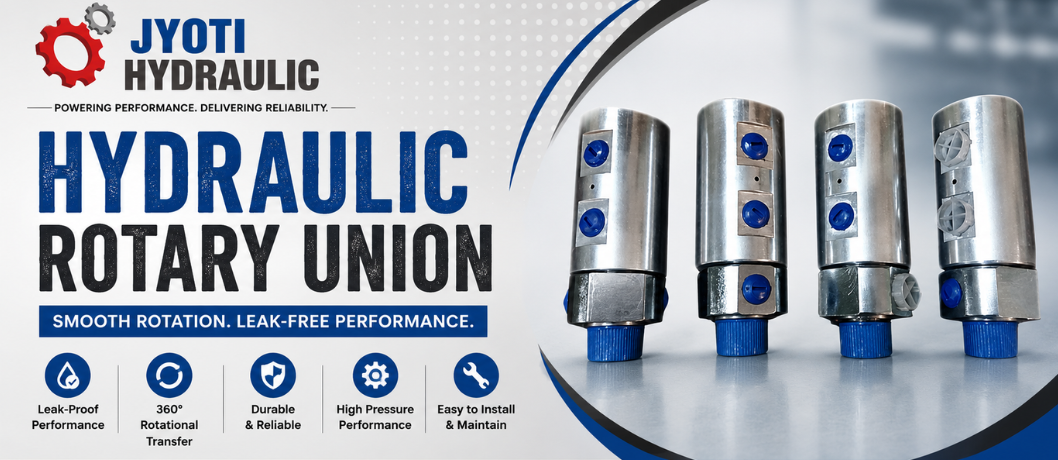
Jyoti Hydraulic provides precision-engineered hydraulic components for machinery where reliable fluid transfer, controlled pressure, and continuous rotation are essential. A hydraulic rotary union creates a sealed connection between a stationary hydraulic supply line and a rotating machine part. It allows pressurised oil to move continuously without twisting hoses, interrupting rotation, or causing excessive leakage. Although compact in size, its performance can directly affect machine accuracy, production uptime, energy consumption, and operator safety.
How Does a Hydraulic Rotary Union Work?
A hydraulic rotary union normally consists of a stationary housing, rotating shaft or rotor, internal flow passage, bearings, and a sealing arrangement. The housing connects to the fixed hydraulic supply, while the rotor connects to the rotating equipment.
Hydraulic oil enters through the stationary inlet, passes through the internal channel, and reaches the rotating assembly. Bearings support the moving section and maintain alignment. Internal seals separate the pressurised fluid from the bearing area and surrounding environment.
Seal performance is especially important. Excessive friction generates heat, while inadequate sealing causes pressure loss or external leakage. The correct balance between seal contact, surface finish, bearing support, and operating clearance determines the reliability of the rotary union.
Single Flow Rotary Unions
Single Flow Rotary Unions contain one independent passage for transferring fluid between stationary and rotating components. They are suitable when a machine requires only one hydraulic supply or return path.
Their relatively simple construction offers several practical advantages, including compact installation, fewer sealing points, easier maintenance, and dependable operation. They are commonly used in rotary fixtures, hydraulic chucks, clamping systems, indexing tables, winding machines, and machine-tool assemblies.
For applications requiring separate pressure and return lines, or multiple hydraulic functions, a multi-passage rotary union may be required.
Important Technical Considerations
The performance of a hydraulic rotary union depends on more than its maximum pressure rating. Important operating factors include:
Pressure and Speed
Pressure creates force on internal seals, while rotational speed produces friction and heat. A union may tolerate high pressure at low speed but require a different seal design for high-speed operation.
Fluid Compatibility
Hydraulic oil, water-glycol fluids, synthetic fluids, and specialised lubricants can react differently with sealing materials. The seal compound must be selected according to the fluid being transferred.
Temperature
Fluid temperature and surrounding heat influence seal hardness, lubrication, and dimensional stability. Operating beyond the recommended range can cause leakage or accelerated wear.
Shaft Alignment
Misalignment between the rotary union and connected equipment places additional load on bearings and seals. Flexible hoses and correctly supported connections help prevent stress on the housing.
Filtration
Contaminated hydraulic oil can damage polished sealing surfaces. Fine metal particles, dirt, and degraded oil may create scoring, internal leakage, and premature failure.
Industrial Applications
Hydraulic rotary unions are used in:
- CNC machines and hydraulic chucks
- Rotary indexing and clamping fixtures
- Steel coil processing lines
- Paper, printing, and converting machines
- Injection moulding equipment
- Wind-energy systems
- Excavators, cranes, and drilling machinery
- Packaging and industrial automation systems
In each application, the union allows hydraulic power to reach a rotating component without limiting its movement.
Benefits of a Correctly Selected Rotary Union
A properly engineered rotary union provides stable hydraulic pressure and reduces leakage-related losses. It also prevents hoses from twisting, bending, or becoming damaged during rotation.
Reliable sealing improves workplace cleanliness and safety, while accurate internal flow passages reduce unnecessary pressure drop. The result is smoother machine operation, fewer shutdowns, reduced oil consumption, and lower maintenance costs.
A quality rotary union also protects connected equipment. Seal or bearing failure can affect hydraulic pumps, actuators, tools, and production components, making correct selection a long-term investment rather than a simple component purchase.
How to Select the Right Hydraulic Rotary Union
Before requesting a quotation, provide the manufacturer with:
- Maximum and normal operating pressure
- Rotational speed in RPM
- Hydraulic fluid type and temperature
- Required flow rate
- Port size and thread specification
- Shaft or flange dimensions
- Rotation direction and duty cycle
- Available installation space
- Environmental conditions
- Number of required flow passages
When comparing Hydraulic Rotary Union Manufacturers in India, review their engineering support, machining quality, seal options, pressure-testing procedures, and ability to customise the product. The lowest-priced union may not provide the lowest operating cost if it requires frequent seal replacement or causes repeated downtime.
Future Trends
Future rotary unions will focus on reduced friction, improved seal materials, compact multi-passage designs, and condition monitoring. Sensors may be used to track temperature, vibration, leakage, and bearing condition before failure occurs. Industries are also demanding more energy-efficient designs with lower pressure loss and longer maintenance intervals.
Conclusion
Hydraulic rotary unions are essential wherever pressurised fluid must pass into rotating machinery. Their reliability depends on correct engineering, compatible materials, clean hydraulic fluid, accurate installation, and appropriate operating conditions.
Whether the requirement is for customised assemblies or compact Single Flow Rotary Unions, working with an experienced manufacturer helps improve machine performance and service life.
Frequently Asked Questions
What is the purpose of a hydraulic rotary union?
It transfers pressurised hydraulic fluid from a stationary supply line to a rotating machine component without twisting the connected hose.
What causes a rotary union to leak?
Common causes include worn seals, contaminated oil, misalignment, excessive pressure, high temperature, damaged sealing surfaces, and incorrect installation.
Can one rotary union carry multiple hydraulic lines?
Yes. Multi-passage models can carry separate pressure, return, or control circuits through independent internal channels.
How is a single flow rotary union different?
A single flow model contains one fluid passage and is generally used for a single hydraulic supply or return function.
Can hydraulic rotary unions be customised?
Yes. Port size, mounting design, number of passages, sealing materials, pressure capacity, and dimensions can be modified according to the application.
Get Expert Assistance from Jyoti Hydraulic
Need help selecting a hydraulic rotary union for your machine? Contact Jyoti Hydraulic to discuss your pressure, speed, fluid, mounting, and flow requirements.
Request a competitive quotation or get expert consultation for standard and customised rotary union solutions.
📧 info@jyotihydraulic.com
📞 +91 9541424317


